Category: Food Production

  • Antibiotics in Agriculture

    Antibiotics in Agriculture

    Post-World War II, the period after World War II which concluded September 2, 1945 after Japan formally surrendered. This period led to shifts in culture, including the rise of consumerism and new social movements.

    Intensification of agriculture created crowded conditions ripe for disease spread leading to the use of antibiotics resulting in a dramatic impact on human medicine, but also on food production.
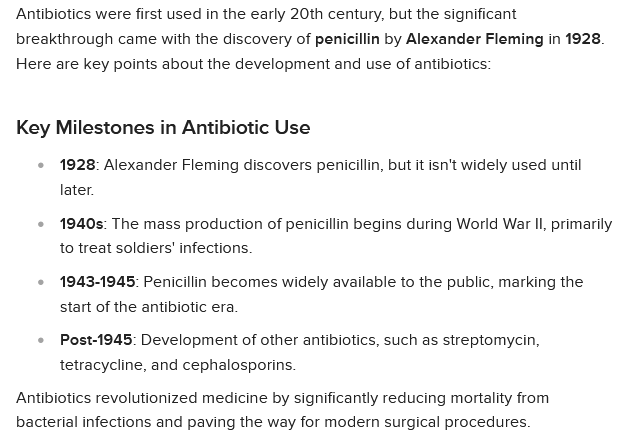
    Penicillin was discovered in 1928 by Alexander Fleming. During WWII, soldiers used penicillin to treat infections. The Anitbiotic Era begins soon after...

    Accelerated use of antibiotics in the 1950s, initially was used to prevent disease in crowded farms and later for growth promotion.

    This contributed to cheaper, more abundant meat, but the widespread use of low doses of antibiotics in livestock laid the groundwork for the serious public health threat of antibiotic resistance, which began to be recognized in the 1960s and has led to evolving regulations and ongoing debates about their use.
    Early use and benefits

    • Disease prevention: In the 1940s, antibiotics were first used in animal agriculture to prevent disease outbreaks on increasingly crowded farms.
    • Growth promotion: Scientists discovered in the 1950s that low doses of antibiotics made animals grow faster and gain weight more efficiently on less feed.
    • Impact on food production: This led to a boom in meat production, making products like chicken, pork, and beef cheaper and more accessible to the public.

    On farms, whaling and fishing fleets, as well as, in processing plants and aquaculture operations, antibiotics were used to treat and prevent disease, increase feed conversion and preserve food.

    Rapid diffusion into nearly all areas of food production and processing was initially viewed as a story of progress on both sides of the Iron Curtain.

    However, from the mid-1950s onwards, agricultural antibiotic use also triggered increasing conflicts about drug residues and antimicrobial resistance (AMR).

    1. Kirchhelle, C. Pharming animals: a global history of antibiotics in food production (1935–2017). Palgrave Commun 4, 96 (2018). https://doi.org/10.1057/s41599-018-0152-2
    2. NV at CEPImperial. (2018) History of Antibiotics: Antibiotic Resistance [YouTube video]. Available at: https://www.youtube.com/watch?v=aEmZid35DxA
    3. Torrella, K. (2023) “Big Meat just can’t quit antibiotics – Meat production is making lifesaving drugs less effective. Where’s the FDA?” Vox, Future Perfect, 8 January. Available at: https://www.vox.com/future-perfect/2023/1/8/23542789/big-meat-antibiotics-resistance-fda
    4. “Antibiotics in Feed – A Brief History.” (n.d.) YouTube video. Available at: https://www.youtube.com/watch?v=rtxKx884iMU
    5. WGBH Frontline. (n.d.) The Trouble with Antibiotics: How Widespread Is the Use on Farms? PBS LearningMedia. Available at: https://www.pbslearningmedia.org/resource/fln33-soc-twafarm/wgbh-frontline-the-trouble-with-antibiotics-how-widespread-is-the-use-on-farms/
    6. Bava, R., Cornetti, F., Lai, C., Pistoni, G., Liverani, G., Lumini, R., de Nise M., Bologna, R.M., Meccariello, C., Bianchi, D., & Pepe, E. (2024) ‘Antimicrobial resistance in livestock: A serious threat to …’, MDPI (open access). Available at: https://www.ncbi.nlm.nih.gov/pmc/articles/PMC11200672/
    7. Sneeringer, S. (2015) “Restrictions on Antibiotic Use for Production Purposes in U.S. Livestock Industries Likely to Have Small Effects on Prices and Quantities”, Economic Research Service, U.S. Department of Agriculture, 24 November. Available at: https://www.ers.usda.gov/amber-waves/2015/november/restrictions-on-antibiotic-use-for-production-purposes-in-u-s-livestock-industries-likely‑to‑have‑small‑effects‑on‑prices‑and‑quantities
    8. Bacanlı, M.G. (2024) ‘The two faces of antibiotics: an overview of the effects of antibiotic residues in foodstuffs’, Archives of Toxicology, 98(6): 1717–1725. Available at: https://pmc.ncbi.nlm.nih.gov/articles/PMC11106094/
  • Our Food These Past 10 Years

    Our Food These Past 10 Years

    Supply Chain Factors Effecting Food Security
    • COVID-19 disruptions (2020): Global halts. Link
    • US-China Trade War (2018-2020): Tariffs spike. Link
    • Suez Canal blockage (2021): Shipping delays. Link
    • Zika outbreak (2015-2016): Americas spread. Link
    • COVID-19 pandemic (2019-): Global. Link
    • Mpox surge (2022): Multi-country. Link
    • Opioid epidemic peak (2016-): US crisis. Link
    • COVID-19 health impacts (2020-): Excess deaths. Link
    • Mental health gaps (2022-): Post-pandemic. Link
    • COVID-19 national lock-downs (2020): 90+ countries. Link
    • Regional extensions (2021): Europe/Asia waves. Link
    • CARES Act stimulus (2020): US economy aid. Link
    • Trade tariffs (2018): US-China. Link
    • WHO funding cuts (2025): US withdrawal. Link
    • Inflation surge (2021-2022): Supply shocks. Link
    • Weather disasters (2015-2024): $1.4T US costs. Link
    • Tariff hikes (2025): Manufacturing rise. Link
    • GDPR enforcement (2018): EU data. Link
    • ACA expansions (2019): US health. Link
    • AI privacy rules (2025): Global. Link
  • Join the Flock: 
Stand Up for Millsboro Chickens, Heritage & Quality Food

    Join the Flock: Stand Up for Millsboro Chickens, Heritage & Quality Food

    Add ‘Your Voice’ to the petition to ‘Keep Chickens Legal’ in Millsboro.

    Every signature helps protect this beloved tradition and ensures that backyard chickens remain part of our community for generations to come.

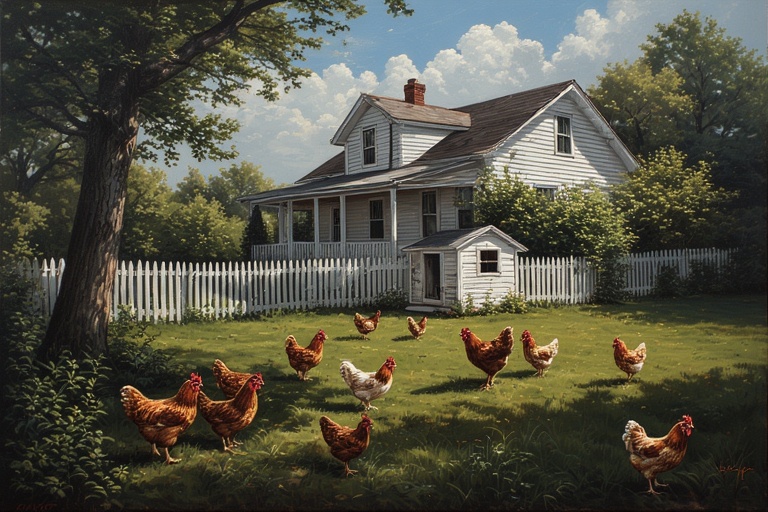
    American Chicken AI Image
    1. Canfora, S. (2024) D‑Silva throws hat into the ring in Millsboro. Coastal Point, 9 May. [online] Available at: https://www.coastalpoint.com/news/communities/millsboro/d-silva-throws-hat-into-the-ring-in-millsboro/article_6d5b7e0a-0e41-11ef-a6c2-df9a07da586f.html [Accessed 27 October 2025]. ↩︎
    2. Thomas, A. (2016) Blue Hens rise to the occasion in national championship victory. University of Delaware, 3 May. [online] Available at: https://www1.udel.edu/udaily/2016/may/blue-hens-050316.html ↩︎
    3. Sammelwitz, P.H. (2007) Blue Hen fact sheet. Department of Animal Science and Agricultural Biochemistry, University of Delaware, 26 September. [online] Available at: https://www1.udel.edu/research/kids/challenge/bluehenimages/bluehenfactsheet.pdf ↩︎
  • Chicken Petition

    Chicken Petition

    PETITION

    1. Quality eggs, environmental & health benefits versus big box stores’ factory production sources especially those with inhumane, unethical animal welfare methods which are taxpayer supported
    2. The current code aligns with community interests and changes are unnecessary or would be overly restrictive on our independence by elimination of our ability to be self-sufficient.

  • Legislation Versus Agency Regulation

    Legislation Versus Agency Regulation

    The Supreme Court has addressed the issue of regulatory agencies and their authority to enforce regulations in our Republic.

    The Court has held that agencies must adhere to certain procedural requirements, including the necessity of legislative approval for significant regulations in some contexts.

    Read more: Legislation Versus Agency Regulation

    Legislative Approval

    • Legislative Basis: Agencies derive their regulatory powers from enabling legislation passed by Congress or state legislatures. This legislation often outlines the broad authority granted to the agency.

    Judicial Oversight

    • Court Rulings: The Supreme Court has ruled that agencies cannot enforce rules that are deemed significantly impactful without congressional or legislative backing. This ensures that there is accountability and representation in the regulatory process.

    Major Questions Doctrine

    • Recent Developments: In recent years, the Court has invoked the “major questions doctrine,” indicating that agencies may have limited authority to regulate major issues unless explicitly authorized by Congress.

    Consequences of Non-Compliance

    • Rule Validity: If an agency enacts a rule without proper legislative authority, such rules may be challenged and potentially invalidated in court.

    This interplay between legislation and agency regulation is crucial, as it aims to maintain the balance of power and uphold accountability in the regulatory process.

    Read more about ‘Major Questions Doctrine’: Legislation Versus Agency Regulation

    Major Questions Doctrine

    Summary of Implications

    1. Chevron Deference Overturned: The ruling in Loper Bright Enterprises v. Raimondo marked a significant shift by rejecting the Chevron doctrine, which previously allowed courts to defer to reasonable agency interpretations of ambiguous statutes. This decision empowers courts to interpret laws themselves, potentially increasing scrutiny of agency regulations.
    2. Challenges to Longstanding Regulations: The Corner Post ruling opens the door for challenges to older regulations by clarifying how and when claims against federal actions under the APA can be made. This could lead to more judicial reviews of established rules.
    3. Major Questions Doctrine: Both West Virginia v. EPA and Biden v. Nebraska illustrate the Court’s emphasis on the major questions doctrine, which requires clear congressional authorization for agencies to regulate significant political and economic issues. This doctrine limits agency power considerably, necessitating explicit guidelines from Congress before agencies can act.

    Recent Supreme Court decisions have significantly impacted the authority of regulatory agencies, emphasizing the need for legislative backing when agencies claim powers over major issues.

    Here are key examples from 2023 and early 2024:

    Key Supreme Court Cases

    Case NameDate DecidedSummaryDecision Link
    Loper Bright Enterprises v. RaimondoJune 28, 2024Overturned the Chevron deference doctrine, indicating that courts must independently interpret statutes without deferring to agencies.Loper Bright Decision
    Corner Post, Inc. v. Board of GovernorsJune 28, 2024Clarified when a regulatory challenge under the Administrative Procedure Act (APA) accrues.Corner Post Decision
    West Virginia v. EPAJune 30, 2022Asserted that the EPA lacked clear congressional authorization to regulate greenhouse gas emissions under the Clean Air Act.West Virginia Decision
    Biden v. NebraskaJune 30, 2023Limited the Department of Education’s authority regarding student debt relief, requiring explicit congressional authorization.Biden Nebraska Decision

  • Factory Farms: How did we get here?

    Factory Farms: How did we get here?

    How Did We Get Here?

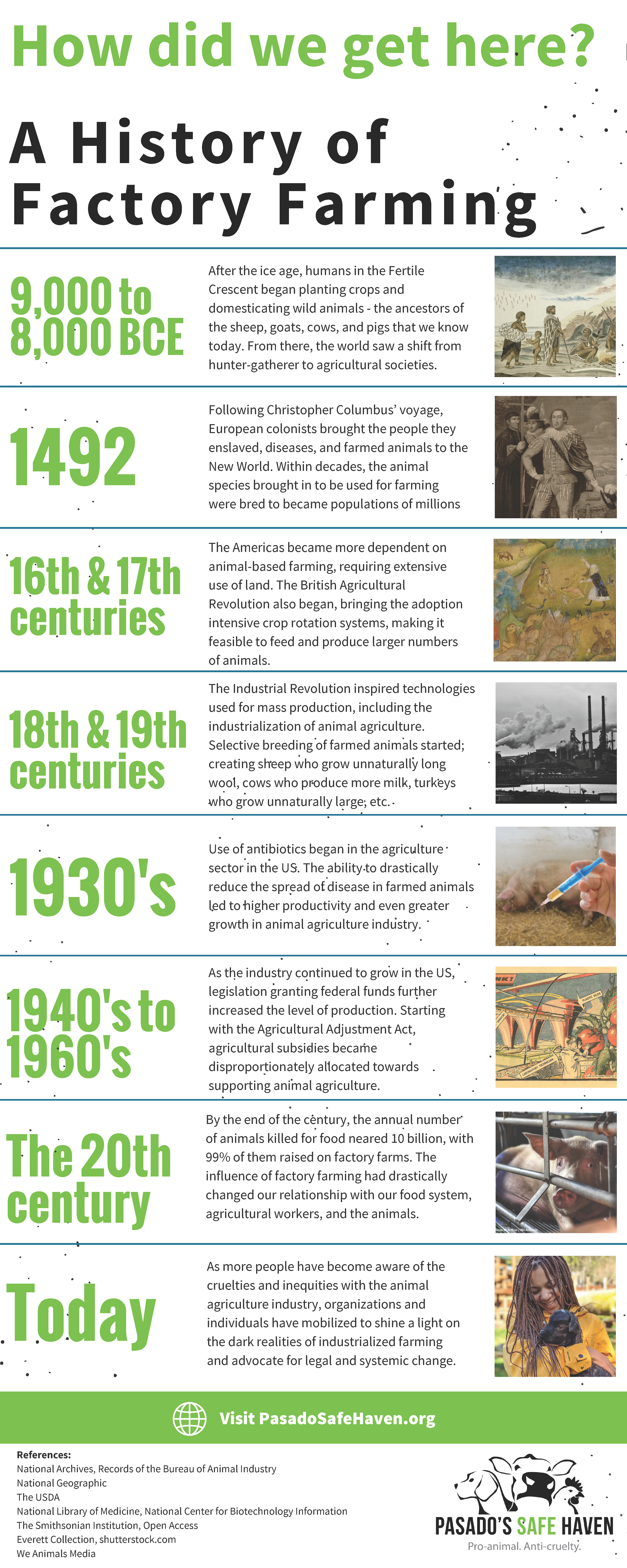
    How Did We Get Here: A History of Factory Farming providing a brief overview of each period from 9,000 BCE, until today. 

PasadoSavfeHaven.Org provides a graphic with brief overviews of each period.

    Man-made manipulation of nature’s animals were implemented for greater production or supply, and bigger profits.

    This led to wide spread use of antibiotics in the 1930’s to reduce the spread of disease in Factory Farmed animals.

    Post-World War II, the period after World War II which concluded September 2, 1945 after Japan formally surrendered. This period led to shifts in culture, including the rise of consumerism and new social movements.

    Antibiotics not only had a dramatic impact on human medicine, but also on food production.

    On farms, whaling and fishing fleets, as well as, in processing plants and aquaculture operations, antibiotics were used to treat and prevent disease, increase feed conversion and preserve food.

    Rapid diffusion into nearly all areas of food production and processing was initially viewed as a story of progress on both sides of the Iron Curtain.

    1. Kirchhelle, C. Pharming animals: a global history of antibiotics in food production (1935–2017). Palgrave Commun 4, 96 (2018). https://doi.org/10.1057/s41599-018-0152-2 ↩︎
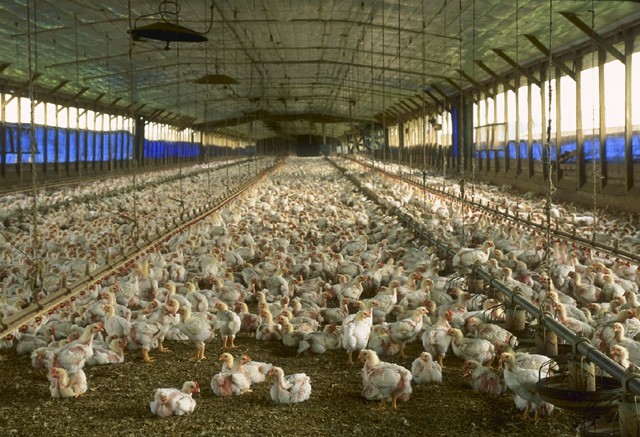
    2. Larry Rana, “A Commercial Meat Chicken Production House,” Wikimedia Commons, https://commons.wikimedia.org/wiki/File:A_Commercial_Meat_Chicken_Production_House.jpg