Post-World War II, the period after World War II which concluded September 2, 1945 after Japan formally surrendered. This period led to shifts in culture, including the rise of consumerism and new social movements.
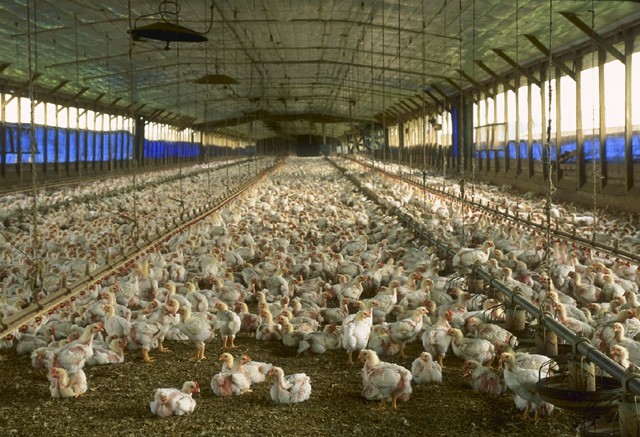
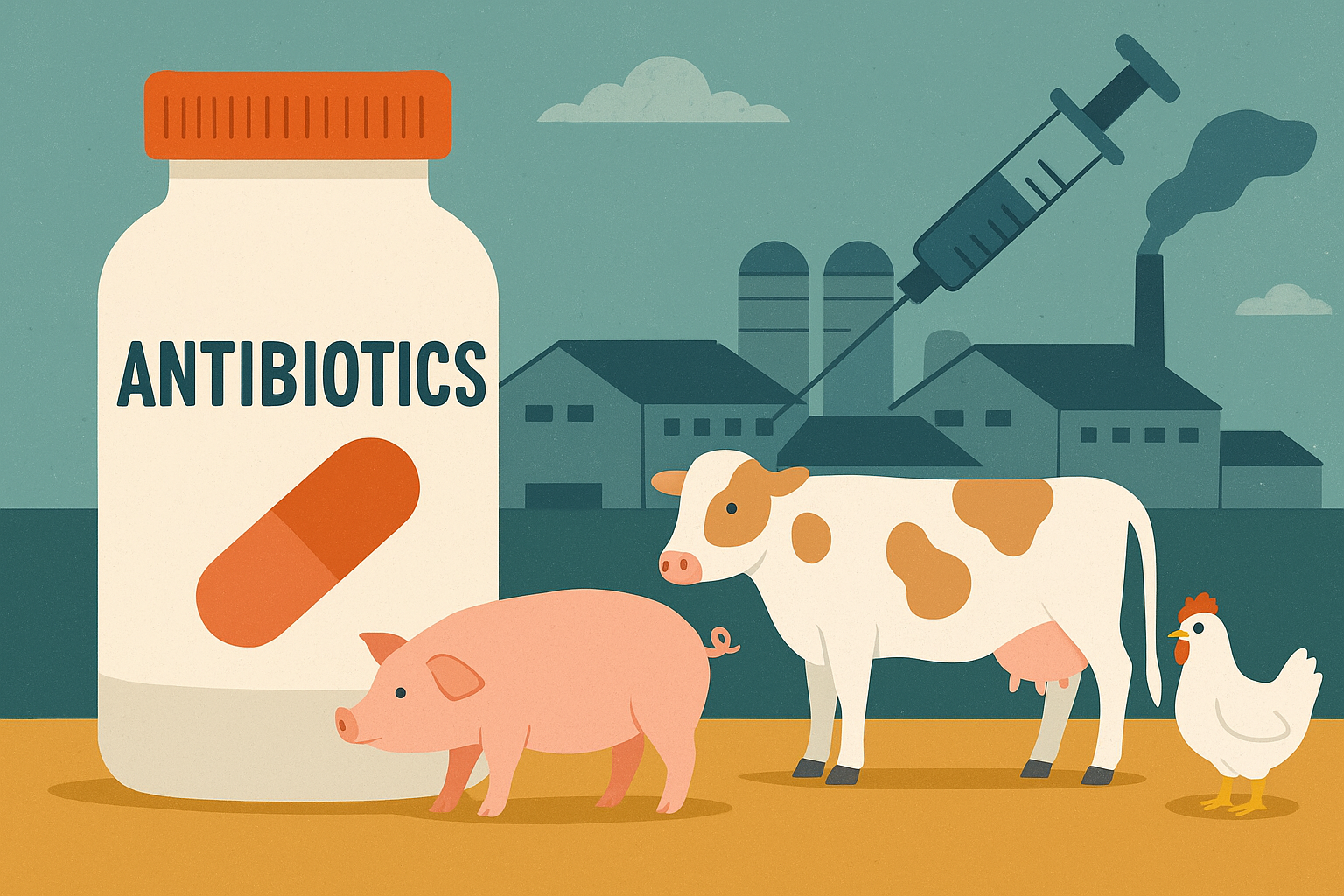
Intensification of agriculture created crowded conditions ripe for disease spread leading to the use of antibiotics resulting in a dramatic impact on human medicine, but also on food production.
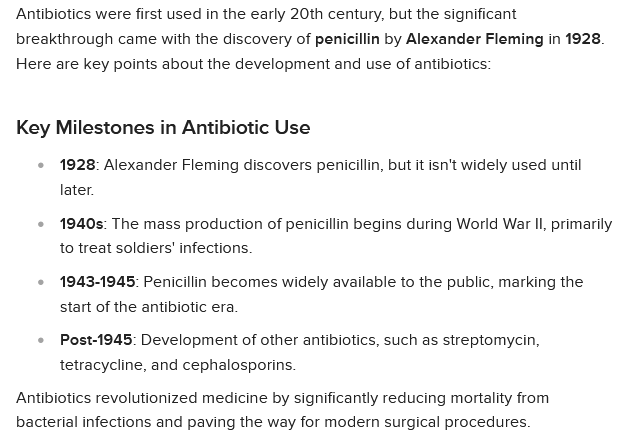
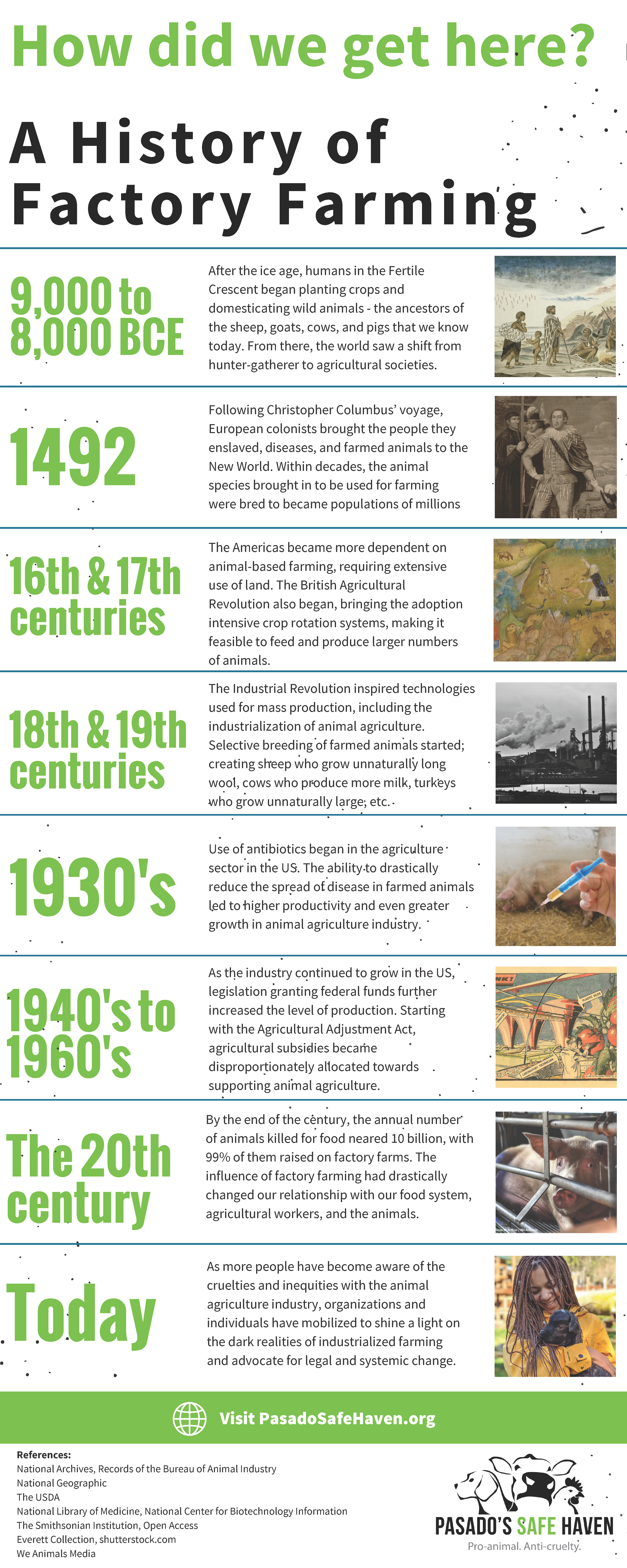
Accelerated use of antibiotics in the 1950s, initially was used to prevent disease in crowded farms and later for growth promotion.
This contributed to cheaper, more abundant meat, but the widespread use of low doses of antibiotics in livestock laid the groundwork for the serious public health threat of antibiotic resistance, which began to be recognized in the 1960s and has led to evolving regulations and ongoing debates about their use.
Early use and benefits
- Disease prevention: In the 1940s, antibiotics were first used in animal agriculture to prevent disease outbreaks on increasingly crowded farms.
- Growth promotion: Scientists discovered in the 1950s that low doses of antibiotics made animals grow faster and gain weight more efficiently on less feed.
- Impact on food production: This led to a boom in meat production, making products like chicken, pork, and beef cheaper and more accessible to the public.
Pharming Animals: A Global History of Antibiotics in Food Production (1935-2017)
On farms, whaling and fishing fleets, as well as, in processing plants and aquaculture operations, antibiotics were used to treat and prevent disease, increase feed conversion and preserve food.
Rapid diffusion into nearly all areas of food production and processing was initially viewed as a story of progress on both sides of the Iron Curtain.
However, from the mid-1950s onwards, agricultural antibiotic use also triggered increasing conflicts about drug residues and antimicrobial resistance (AMR).
Sources
- Kirchhelle, C. Pharming animals: a global history of antibiotics in food production (1935–2017). Palgrave Commun 4, 96 (2018). https://doi.org/10.1057/s41599-018-0152-2
- NV at CEPImperial. (2018) History of Antibiotics: Antibiotic Resistance [YouTube video]. Available at: https://www.youtube.com/watch?v=aEmZid35DxA
- Torrella, K. (2023) “Big Meat just can’t quit antibiotics – Meat production is making lifesaving drugs less effective. Where’s the FDA?” Vox, Future Perfect, 8 January. Available at: https://www.vox.com/future-perfect/2023/1/8/23542789/big-meat-antibiotics-resistance-fda
- “Antibiotics in Feed – A Brief History.” (n.d.) YouTube video. Available at: https://www.youtube.com/watch?v=rtxKx884iMU
- WGBH Frontline. (n.d.) The Trouble with Antibiotics: How Widespread Is the Use on Farms? PBS LearningMedia. Available at: https://www.pbslearningmedia.org/resource/fln33-soc-twafarm/wgbh-frontline-the-trouble-with-antibiotics-how-widespread-is-the-use-on-farms/
- Bava, R., Cornetti, F., Lai, C., Pistoni, G., Liverani, G., Lumini, R., de Nise M., Bologna, R.M., Meccariello, C., Bianchi, D., & Pepe, E. (2024) ‘Antimicrobial resistance in livestock: A serious threat to …’, MDPI (open access). Available at: https://www.ncbi.nlm.nih.gov/pmc/articles/PMC11200672/
- Sneeringer, S. (2015) “Restrictions on Antibiotic Use for Production Purposes in U.S. Livestock Industries Likely to Have Small Effects on Prices and Quantities”, Economic Research Service, U.S. Department of Agriculture, 24 November. Available at: https://www.ers.usda.gov/amber-waves/2015/november/restrictions-on-antibiotic-use-for-production-purposes-in-u-s-livestock-industries-likely‑to‑have‑small‑effects‑on‑prices‑and‑quantities
- Bacanlı, M.G. (2024) ‘The two faces of antibiotics: an overview of the effects of antibiotic residues in foodstuffs’, Archives of Toxicology, 98(6): 1717–1725. Available at: https://pmc.ncbi.nlm.nih.gov/articles/PMC11106094/